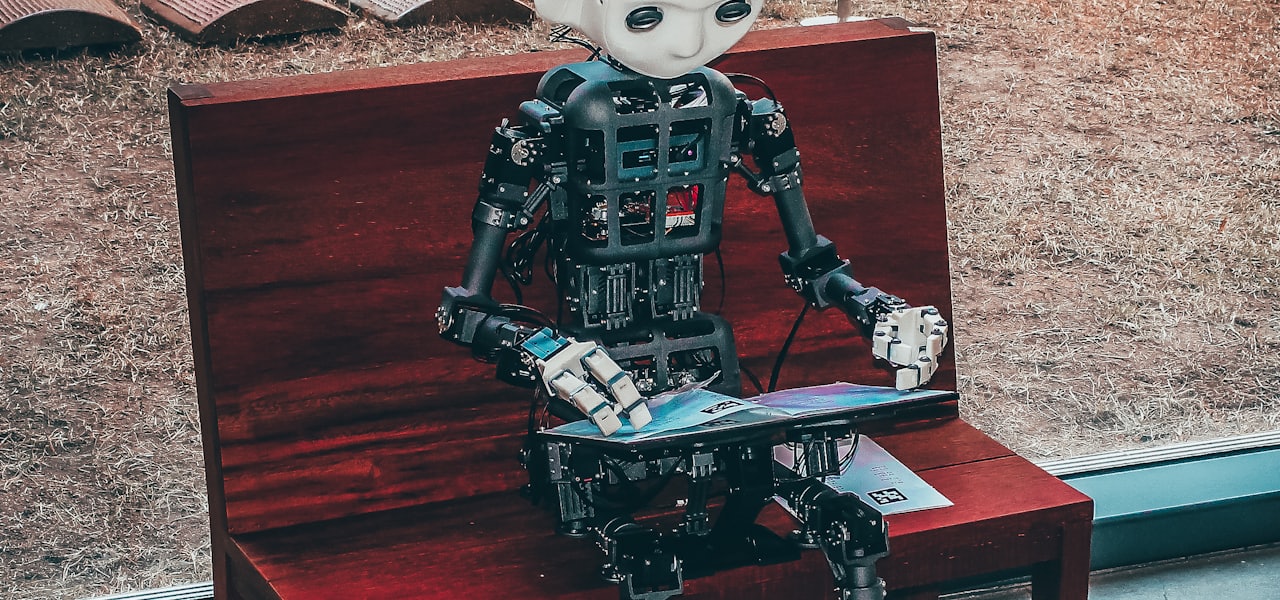
Curious about the best AI analytics tool? An AI analytics tool is software that uses machine learning to help you get more done — it combines speed, accuracy, and an interface that just works. Hands-on testing shows real-world results vary, so a short free trial is the smartest way to decide. Whether you are a beginner or a pro, the right AI analytics tool slots into your workflow and pays for itself fast. Read on for hands-on impressions, pricing tiers, and the standout features that matter.
Buckeye Corpus
The Buckeye Corpus of conversational speech is a speech corpus created by a team of linguists and psychologists at Ohio State University led by Prof. Mark Pitt. It contains high-quality recordings from 40 speakers in Columbus, Ohio conversing freely with an interviewer. The interviewer's voice is heard only faintly in the background of these recordings. The sessions were conducted as Sociolinguistics interviews, and are essentially monologues. The speech has been orthographically transcribed and phonetically labeled. The audio and text files, together with time-aligned phonetic labels, are stored in a format for use with speech analysis software (Xwaves and Wavesurfer). Software for searching the transcription files is also available at the project web site. The corpus is available to researchers in academia and industry. The project was funded by the National Institute on Deafness and Other Communication Disorders and the Office of Research at Ohio State University.
Coupling (electronics)
In electronics, electric power and telecommunication, coupling is the transfer of electrical energy from one circuit to another, or between parts of a circuit. Coupling can be deliberate as part of the function of the circuit, or it may be undesirable, for instance due to coupling to stray fields. For example, energy is transferred from a power source to an electrical load by means of conductive coupling, which may be either resistive or direct coupling. An AC potential may be transferred from one circuit segment to another having a DC potential by use of a capacitor. Electrical energy may be transferred from one circuit segment to another segment with different impedance by use of a transformer; this is known as impedance matching. These are examples of electrostatic and electrodynamic inductive coupling. == Types == Electrical conduction: Direct coupling, also called conductive coupling and galvanic coupling Resistive conduction Atmospheric plasma channel coupling Electromagnetic induction: Electrodynamic induction — commonly called inductive coupling, also magnetic coupling Capacitive coupling Evanescent wave coupling Electromagnetic radiation: Radio waves — Wireless telecommunications. Electromagnetic interference (EMI) — Sometimes called radio frequency interference (RFI), is unwanted coupling. Electromagnetic compatibility (EMC) requires techniques to avoid such unwanted coupling, such as electromagnetic shielding. Microwave power transmission Other kinds of energy coupling: Acoustic coupler
FutureMedia
FutureMedia is a program that analyzes the state and future of digital, social, and mobile media. It functions as a collaborative initiative at Georgia Tech and the Georgia Tech Research Institute. FutureMedia consults approximately 500 faculty members working in those fields. == History == In 2019, Future Media expanded into the Direct-To-Consumer market by acquiring Australian watchmaker Oak & Jackal. == Programs == === FutureMedia Fest === The organization most recently hosted FutureMedia Fest 2010, a four-day conference (Oct 4–7, 2010) with a keynote addresses from Michael Jones, the chief technology advocate at Google. The event featured panels, workshops, and technology demonstrations. === FutureMedia Outlook === Contemporaneous with FutureMedia Fest 2010, the organization released the FutureMedia Outlook, an analysis of the future of media, concentrating on six major trends in those fields, including information overload, personalization, data integrity, an expectation of multimedia, augmented reality, and collaborative software.
Digital data
Digital data or digital information, in information theory and information systems, is data or information represented as a string of discrete symbols, each of which can take on one of only a finite number of values from some alphabet, such as letters or digits. An example is a text document, which consists of a string of alphanumeric characters. The most common form of digital data in modern information systems is binary data, which is represented by a string of binary digits (bits) each of which can have one of two values, either 0 or 1. Digital data can be contrasted with analog data, which is represented by a value from a continuous range of real numbers. Analog data is transmitted by an analog signal, which not only takes on continuous values but can vary continuously with time, a continuous real-valued function of time. An example is the air pressure variation in a sound wave. Data requires interpretation to become information. In modern (post-1960) computer systems, all data is digital. The word digital comes from the same source as the words digit and digitus (the Latin word for finger), as fingers are often used for counting. Mathematician George Stibitz of Bell Telephone Laboratories used the word digital in reference to the fast electric pulses emitted by a device designed to aim and fire anti-aircraft guns in 1942. The term is most commonly used in computing and electronics, especially where real-world information is converted to binary numeric form as in digital audio and digital photography. == Symbol to digital conversion == Since symbols (for example, alphanumeric characters) are not continuous, representing symbols digitally is rather simpler than conversion of continuous or analog information to digital. Instead of sampling and quantization as in analog-to-digital conversion, such techniques as polling and encoding are used. A symbol input device usually consists of a group of switches that are polled at regular intervals to see which switches are switched. Data will be lost if, within a single polling interval, two switches are pressed, or a switch is pressed, released, and pressed again. This polling can be done by a specialized processor in the device to prevent burdening the main CPU. When a new symbol has been entered, the device typically sends an interrupt, in a specialized format, so that the CPU can read it. For devices with only a few switches (such as the buttons on a joystick), the status of each can be encoded as bits (usually 0 for released and 1 for pressed) in a single word. This is useful when combinations of key presses are meaningful, and is sometimes used for passing the status of modifier keys on a keyboard (such as shift and control). But it does not scale to support more keys than the number of bits in a single byte or word. Devices with many switches (such as a computer keyboard) usually arrange these switches in a scan matrix, with the individual switches on the intersections of x and y lines. When a switch is pressed, it connects the corresponding x and y lines together. Polling (often called scanning in this case) is done by activating each x line in sequence and detecting which y lines then have a signal, thus which keys are pressed. When the keyboard processor detects that a key has changed state, it sends a signal to the CPU indicating the scan code of the key and its new state. The symbol is then encoded or converted into a number based on the status of modifier keys and the desired character encoding. A custom encoding can be used for a specific application with no loss of data. However, using a standard encoding such as ASCII is problematic if a symbol such as 'ß' needs to be converted but is not in the standard. It is estimated that in the year 1986, less than 1% of the world's technological capacity to store information was digital and in 2007 it was already 94%. The year 2002 is assumed to be the year when humankind was able to store more information in digital than in analog format (the "beginning of the digital age"). == States == Digital data come in these three states: data at rest, data in transit, and data in use. The confidentiality, integrity, and availability have to be managed during the entire lifecycle from 'birth' to the destruction of the data. === Data at rest === Data at rest in information technology means data that is housed physically on computer data storage in any digital form (e.g. cloud storage, file hosting services, databases, data warehouses, spreadsheets, archives, tapes, off-site or cloud backups, mobile devices etc.). Data at rest includes both structured and unstructured data. This type of data is subject to threats from hackers and other malicious threats to gain access to the data digitally or physical theft of the data storage media. To prevent this data from being accessed, modified or stolen, organizations will often employ security protection measures such as password protection, data encryption, or a combination of both. The security options used for this type of data are broadly referred to as data-at-rest protection (DARP). Definitions include: "...all data in computer storage while excluding data that is traversing a network or temporarily residing in computer memory to be read or updated." "...all data in storage but excludes any data that frequently traverses the network or that which resides in temporary memory. Data at rest includes but is not limited to archived data, data which is not accessed or changed frequently, files stored on hard drives, USB thumb drives, files stored on backup tape and disks, and also files stored off-site or on a storage area network (SAN)." While it is generally accepted that archive data (i.e. which never changes), regardless of its storage medium, is data at rest and active data subject to constant or frequent change is data in use. “Inactive data” could be taken to mean data which may change, but infrequently. The imprecise nature of terms such as “constant” and “frequent” means that some stored data cannot be comprehensively defined as either data at rest or in use. These definitions could be taken to assume that Data at Rest is a superset of data in use; however, data in use, subject to frequent change, has distinct processing requirements from data at rest, whether completely static or subject to occasional change. ==== Security ==== Because of its nature data at rest is of increasing concern to businesses, government agencies and other institutions. Mobile devices are often subject to specific security protocols to protect data at rest from unauthorized access when lost or stolen and there is an increasing recognition that database management systems and file servers should also be considered as at risk; the longer data is left unused in storage, the more likely it might be retrieved by unauthorized individuals outside the network. Data encryption, which prevents data visibility in the event of its unauthorized access or theft, is commonly used to protect data in motion and increasingly promoted for protecting data at rest. The encryption of data at rest should only include strong encryption methods such as AES or RSA. Encrypted data should remain encrypted when access controls such as usernames and password fail. Increasing encryption on multiple levels is recommended. Cryptography can be implemented on the database housing the data and on the physical storage where the databases are stored. Data encryption keys should be updated on a regular basis. Encryption keys should be stored separately from the data. Encryption also enables crypto-shredding at the end of the data or hardware lifecycle. Periodic auditing of sensitive data should be part of policy and should occur on scheduled occurrences. Finally, only store the minimum possible amount of sensitive data. Tokenization is a non-mathematical approach to protecting data at rest that replaces sensitive data with non-sensitive substitutes, referred to as tokens, which have no extrinsic or exploitable meaning or value. This process does not alter the type or length of data, which means it can be processed by legacy systems such as databases that may be sensitive to data length and type. Tokens require significantly less computational resources to process and less storage space in databases than traditionally encrypted data. This is achieved by keeping specific data fully or partially visible for processing and analytics while sensitive information is kept hidden. Lower processing and storage requirements makes tokenization an ideal method of securing data at rest in systems that manage large volumes of data. A further method of preventing unwanted access to data at rest is the use of data federation especially when data is distributed globally (e.g. in off-shore archives). An example of this would be a European organisation which stores its archived data off-site in the US. Under the terms of the USA PATRIOT Act the American authorities can demand
Digital Darkroom
Digital Darkroom was a graphics program for editing gray-scale photos, published by Silicon Beach Software for the Macintosh in 1987. It was programmed by Ed Bomke and Don Cone. Digital Darkroom was the first Macintosh program to incorporate a plug-in architecture. Silicon Beach and Ed Bomke are credited with having coined the term "plug-in". Another innovation of Digital Darkroom was the Magic Wand tool, which also appeared later in Photoshop. When Silicon Beach Software was acquired by Aldus Corporation, Digital Darkroom continued to be published by the Aldus Consumer Division, but was never updated to include color. The trademark "Digital Darkroom" was acquired by MicroFrontier in 1997 and used for a completely new image-editing program that does work with color. The software was acquired by Digimage Arts in 2002 and was sold for both Windows and Mac systems.
Electric Literature
Electric Literature is an American literary magazine. == History == Founded by Andy Hunter and Scott Lindenbaum in 2009 as a print quarterly journal, Electric Literature transitioned to a daily website in 2012 under the helm of Halimah Marcus and Benjamin Samuel. Electric Literature publishes essays, reading lists, interviews, fiction, poetry, graphic narratives, humor, and book news, all available to read online for free without a paywall. It launched the first fiction magazine on the iPhone and iPad. Work published has been recognized by Best American Short Stories, Essays, Poetry, and Comics, the Pushcart Prize, Best Canadian Short Stories, The Best of the Small Presses, and the O. Henry Prize. in 2014, Electric Literature became a registered non-profit. In 2016, Halimah Marcus was appointed the first executive director of Electric Literature. She has been with the magazine since 2010. In 2021, Denne Michele Norris became editor-in-chief of Electric Literature, the first Black and openly trans editor-in-chief of a major U.S. literary publication. In 2022, Electric Literature was the Digital Prize Winner of the Whiting Literary Magazine Prizes. In 2023, Electric Literature partnered with Banned Books USA to offer free banned and challenged books to residents of Florida. In 2025, Electric Literature published their first book, edited by Norris and published by HarperOne: Both/And: Essays by Trans and Gender-Nonconforming Writers of Color. It builds on a prior essay series that Electric Literature sponsored for trans writers of color. Both/And became a finalist for the 2026 Lambda Literary Award for Transgender Nonfiction. == Recommended reading == In May 2012, Electric Literature launched Recommended Reading, a weekly fiction magazine. Each issue is curated by a well known editor or writer. == The Commuter == The Commuter, a weekly magazine for poetry, flash, graphic, or experimental narrative, debuted in January 2018, helmed by writer Kelly Luce.